Zara O'Brien MBCAP GMBPsS
Creative Psychological Support for Children and Families
Welcome to The Children’s Psychology Hub. I’m Zara O’Brien — psychotherapist, researcher, and trainer.
Helping children explore, understand, and express themselves through creative, evidence-based psychological support — while empowering the adults around them with practical tools to help them flourish.

Wellbeing Groups for Home Educated Children
These groups go beyond ticking a PSHE box.
Every session is led by Zara, a qualified psychotherapist, and draws on evidence-based approaches — mindfulness, compassion-focused therapy, DBT skills, and more — delivered in a way that's genuinely accessible, age-appropriate, and actually enjoyable for children.
The goal isn't just curriculum coverage. It's equipping children with real tools, real knowledge, and a real understanding of their own emotional world — so they can flourish whatever life brings them.
Small cohorts. Six weeks. Face to face and online. PSHE-mapped and clinically grounded.
Places are limited — groups fill quickly.


Mental wellbeing is a subject too!
Signature Resources and Toolkit
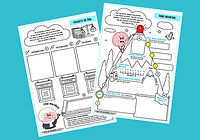
These are just a handful of our signature mats which are available as low cost digital downloads for you to print at home, or also our premium, wipe clean mats!


My Worry Space

When to use it:
For children who carry worry quietly — who can't sleep, who avoid things, who need something to hold their worry in so it feels smaller and more manageable.
How to use it:
You don't need a therapy room. Sit together, let your child lead, and work through it at their pace. A quiet moment at home is all it takes.
What it helps with:
→ Naming and externalising worry→ Sorting what's in and out of their control→ Building a simple, repeatable coping response
Why this works:
Worry grows when it stays inside. When children can see their worry written down — sorted into what they can and can't control — the nervous system begins to settle. This is the foundation of cognitive approaches to childhood anxiety, made accessible for any child.


Who I Am Below The Surface
When to use it:
For children who struggle to articulate how they're really feeling — who present as "fine" on the outside but whose behaviour tells a different story. Useful when a child seems disconnected from their emotions, finds it hard to talk about themselves, or needs support building self-awareness and identity.
How to use it:
You don't need a therapy room. Sit alongside your child and explore it together at their pace — there's no right or wrong answer. A curious, unhurried conversation is all it takes. Practitioners can use it as an opening session tool or return to it across several weeks.
What it helps with:
→ Building emotional vocabulary and self-awareness
→ Exploring the gap between how we appear and how we feel
→ Strengthening identity and sense of self
→ Opening up conversations that are hard to start
Why this works:
Children often show the world only what feels safe to share. The iceberg model gives them a visual framework to separate their outer presentation from their inner world — making the invisible visible. When children can name what's beneath the surface, they begin to feel understood, and that is where real change starts.


When to use it:
For children who struggle to manage big feelings of anger — whether that looks like explosive outbursts, shutdown, or anything in between. Ideal when a child has been told they have a "temper" but has never been given the tools to understand or work with it.
How to use it:
Work through the mat together, following the child's lead. It can be used in a single session or revisited over time as the child's self-awareness grows. Parents can use it at home after a calm moment; practitioners can build it into therapeutic or pastoral work as a foundation for anger exploration.
What it helps with:
→ Identifying personal anger triggers and early warning signs
→ Understanding anger as a signal, not a problem
→ Building a personalised toolkit of coping responses
→ Reducing shame around big feelings
Why this works:
Anger rarely arrives without warning — children just haven't been taught to read the signs. By mapping their own anger journey, children begin to recognise their patterns and build agency over their responses. This is the foundation of emotion regulation work, made accessible and even enjoyable for children.
My Anger Adventure

For Schools & Practitioners
The Greenhouse Support Planning Toolkit


Child-led wellbeing planning - in their words, at their pace.
A complete support planning tool that puts children at the centre of their own plan. Using illustrated mats, weather emotion cards, and the FLOURISH framework, children explore their feelings, identify their strengths, and create a Flourish Plan in their own words.
🌱 Ages 4–11 · 🗺️ Two llustrated mats · 🌤️ 8 weather cards ·
📋 Flourish Plan worksheet · 🎬 Training video included


Talking Therapy for Children & Young People
02
FOR CHILDREN & TEENS
A safe, consistent space for your child — child-led, creative where needed, and always attentive to the whole child, not just the presenting problem.

FREE MONTHLY NEWSLETTER
Join my village.
It’s free, always.
Every month I share free resources, honest thoughts , reflective questions, and content that makes you feel less alone in this work and parenting world!
Free resources you can use straight away
Thought leadership that challenges how you think
Reflective questions for parents and professionals alike
Guest articles from across the children’s world
No spam. Unsubscribe whenever you like.